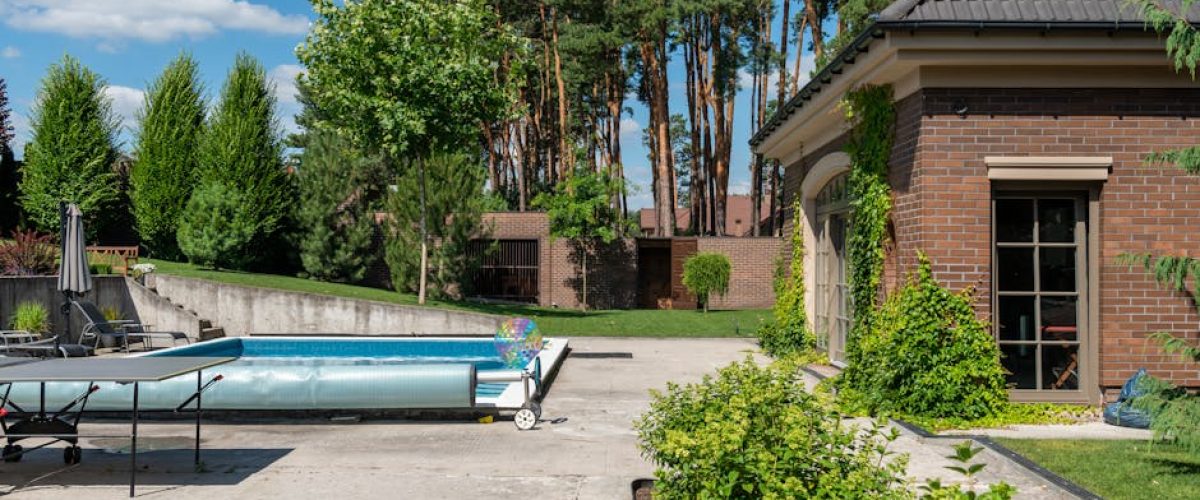
Why a Concrete Patio in Fort Lauderdale Requires More Than Just Pouring Slab
If you’re planning a concrete patio in Fort Lauderdale, the decision seems simple on the surface. Pick a shape, pour the concrete, and enjoy. But South Florida’s combination of intense UV, salt-laden air, seasonal downpours, and a high water table changes how every part of this job should be done — from the mix design to the sub-base prep to the finish you choose.
Get these details wrong and you’ll see hairline cracks within a year, surface scaling within two, and a full tear-out conversation within five. Get them right and a concrete patio becomes one of the best investments you can make in a Fort Lauderdale home — a low-maintenance outdoor living space that holds up for decades.
This guide covers your real options, honest cost expectations for Broward County, and the climate-specific decisions that separate a patio that lasts from one that doesn’t.
Concrete Patio Options: Stamped, Poured, Stained, and More
“Concrete patio” covers a wide range of finishes and styles. Here’s what Fort Lauderdale homeowners most commonly choose — and what each option actually involves.
Standard Poured Concrete (Broom Finish)
This is the baseline. A standard gray slab with a broom-swept texture for slip resistance. It’s the most affordable option and works well for utility patios, side yards, and areas that don’t need to impress. In South Florida, a good broom finish actually performs well because the texture handles wet conditions better than a smooth trowel finish.
Stamped Concrete Patio — South Florida’s Most Popular Upgrade
A stamped concrete patio in South Florida mimics the look of natural stone, brick, slate, or tile — at a fraction of the material cost. The concrete is poured, then stamped with patterns and colored with integral pigments or release agents before it cures. The result is a custom-looking surface on a standard slab.
Stamped concrete does require resealing every two to three years in Fort Lauderdale’s climate. UV and rain break down sealers faster here than in northern states. That’s not a dealbreaker — it’s just a maintenance reality that your contractor should explain upfront.
Stained or Dyed Concrete
Acid staining or water-based dyes give concrete a mottled, earthy look without the texture of stamping. This works well for covered patios or screened enclosures where UV exposure is reduced. On fully exposed Fort Lauderdale patios, stain longevity drops — so this option pairs best with a quality UV-resistant sealer.
Polished or Exposed Aggregate
Exposed aggregate reveals the stone within the concrete mix for a natural, textured look. It’s durable and low-maintenance. Polished concrete, while popular indoors, is rarely ideal for outdoor patios in South Florida — it gets dangerously slick when wet.
Takeaway: Your finish choice should match your exposure conditions. A fully sun-exposed patio in Pompano Beach needs different treatment than a shaded lanai in Weston.
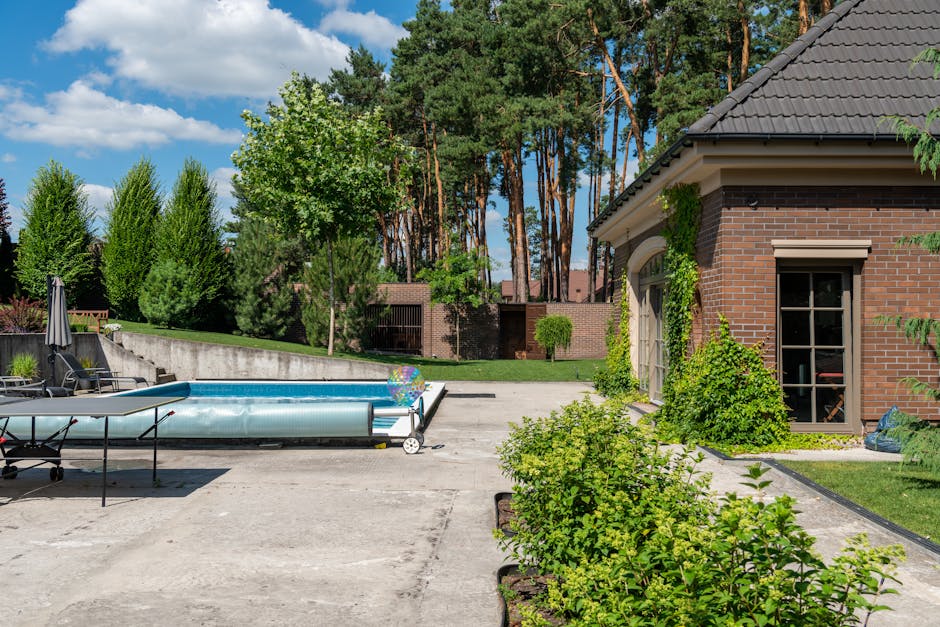
What Drives the Cost of a Concrete Patio in Fort Lauderdale?
Cost is the first question most homeowners ask, and the honest answer is: it depends on scope, finish, and site conditions. Here are the main drivers.
Size and Thickness
Most residential patios in Broward County are poured at 4 inches thick. Larger patios obviously cost more in material and labor, but the per-square-foot cost often drops slightly as the project scales up. A 200-square-foot patio and a 500-square-foot patio won’t cost proportionally different.
Finish Level
A basic broom-finish slab is the least expensive. Stamped concrete adds cost for patterns, color, and sealing. Custom designs with multiple stamp patterns, borders, or color combinations push the price higher. In Broward County, many standard patio projects fall in the range of $8 to $18 per square foot for the concrete work itself — but that range moves significantly based on finish complexity, access, and demolition of any existing surface.
Site Prep and Existing Conditions
This is where homeowners consistently underestimate cost. If there’s an existing patio to demolish, tree roots to clear, grading issues, or drainage problems, the prep work can add meaningfully to the total. In Fort Lauderdale, the water table is often close to the surface — especially east of US-1 — which can require additional compaction or sub-base work to prevent settling.
Permits and Code
Fort Lauderdale and most Broward County municipalities require a permit for patio construction, particularly when it involves new impervious surface area, changes to drainage, or proximity to property setback lines. Permit fees and the time to pull them are part of the project cost. A licensed contractor handles this — an unlicensed one usually skips it, which creates real problems at resale or insurance time. You can verify permit requirements through the City of Fort Lauderdale Building Services portal.
Takeaway: Get a written scope that separates concrete work, demo, site prep, and permits. If a quote lumps everything into one number, ask for a breakdown.
Why South Florida’s Climate Changes the Concrete Conversation
Concrete is concrete everywhere, right? Not exactly. Here’s what matters specifically in Fort Lauderdale and Broward County.
Heat and Cure Time
Concrete cures through a chemical reaction, not just drying. In South Florida’s summer heat — with ambient temps regularly above 90°F — the surface can cure too fast relative to the interior, which causes shrinkage cracks. Experienced contractors adjust pour timing (early morning), use curing compounds, and sometimes modify the mix to control the cure rate. This is one of the clearest differences between a crew that knows South Florida and one that doesn’t.
Rain and Drainage
Fort Lauderdale averages over 60 inches of rainfall per year. A patio must be sloped away from the home — typically a minimum of 1/8 inch per foot — and the drainage plan should account for where that water goes. Flat or poorly graded patios pool water against the foundation, which is a far bigger problem here than in drier climates. In flood-prone zones, impervious surface limits may also apply under local stormwater ordinances.
Salt Air and Rebar Protection
Coastal properties in Fort Lauderdale, Deerfield Beach, and Hollywood face salt air exposure that accelerates rebar corrosion inside concrete. The Florida Building Code specifies minimum concrete cover over reinforcement for different exposure conditions. A patio three blocks from the ocean should not be built with the same rebar depth as one in Miramar. This is a detail most homeowners never think about — but it’s the difference between a 30-year slab and a 10-year problem.
Takeaway: South Florida doesn’t just affect how a concrete patio looks. It affects how the mix is designed, how it’s poured, how it’s reinforced, and how it drains. Every one of those decisions matters.
Why Hiring a Licensed Contractor Matters for Concrete Work
Concrete patios attract a lot of unlicensed operators in Broward County. The work looks simple from the outside — dig, form, pour, finish. But the consequences of cutting corners show up slowly and expensively.
Here’s what to verify before hiring anyone:
- Active Florida contractor license — check it on the DBPR website, not just their word
- Insurance (liability and workers’ comp) — if a crew member gets hurt on your property and there’s no coverage, that liability can fall on you
- Permit history — ask if they pull permits for patio work. If the answer is “you don’t need one,” that’s a red flag
- Written scope and warranty — verbal agreements don’t protect anyone
One common mistake: homeowners hire a concrete crew based solely on the lowest bid, only to discover the quote didn’t include demo, grading, rebar, or sealing. The “cheap” bid ends up the same price — with worse execution. Always compare apples to apples.
What Homeowners Often Miss
A few things that consistently surprise Fort Lauderdale homeowners mid-project:
- Sealer maintenance is real. Stamped and stained patios need resealing on a schedule. Budget for it.
- Color looks different in full sun. Always view color samples outdoors, not inside a showroom. Fort Lauderdale sunlight washes out dark tones more than you’d expect.
- Expansion joints aren’t flaws. Control joints are cut intentionally to manage cracking. A slab with no joints will crack randomly — and those cracks won’t be pretty.
- Timing matters. Pouring in rainy season (June through October) requires tighter scheduling and weather contingency. It’s not impossible — but it adds complexity.
Ready to Plan Your Concrete Patio in Fort Lauderdale?
If you’re trying to figure out the right size, finish, and budget for a concrete patio in Fort Lauderdale or anywhere in Broward County, the next step is a real conversation with a contractor who knows the local conditions. Oak Park Construction builds concrete patios across South Florida — from basic slabs to stamped and stained designs — with proper permitting, site prep, and climate-appropriate installation.
Request a free patio estimate with a written scope breakdown. Send us your measurements, photos, or design ideas and we’ll give you a realistic range for your property.