Skipping Site Prep Is the Most Expensive Concrete Mistake You Can Make
A viral video recently showed a crew pouring concrete directly onto grass. No grading. No compaction. No base material. Just wet concrete on top of a lawn. The internet roasted it — but this kind of thing happens more often than you’d think, especially with unlicensed crews working residential jobs in Broward County.
In South Florida, that shortcut doesn’t just look bad. It leads to cracking, sinking, and structural failure — sometimes within months. The combination of sandy soils, a high water table, heavy rains, and intense heat makes concrete pouring mistakes Florida homeowners overlook far more destructive here than in other parts of the country.
This article breaks down the critical steps of proper concrete site preparation — grading, compaction, base material, and moisture barriers — and explains exactly what goes wrong when those steps get skipped.
Why Concrete Pouring Mistakes in Florida Start Before the Truck Arrives
Most concrete failures aren’t caused by the concrete itself. They’re caused by what’s underneath it. Site preparation is the foundation of every successful pour, and it involves several distinct steps — each one doing a specific job.
Grading: Controlling Where Water Goes
Grading means shaping the ground to direct water away from the slab and away from your home’s foundation. In Pompano Beach and Fort Lauderdale, where afternoon storms dump heavy rain fast, poor grading leads to water pooling on or under the slab. That trapped water erodes the base material, creates voids, and causes the slab to settle unevenly.
Proper grading also accounts for the slope of your lot relative to neighboring properties and drainage structures. Skip it, and you’re building on ground that actively works against the concrete.
Compaction: Preventing the Ground from Shifting
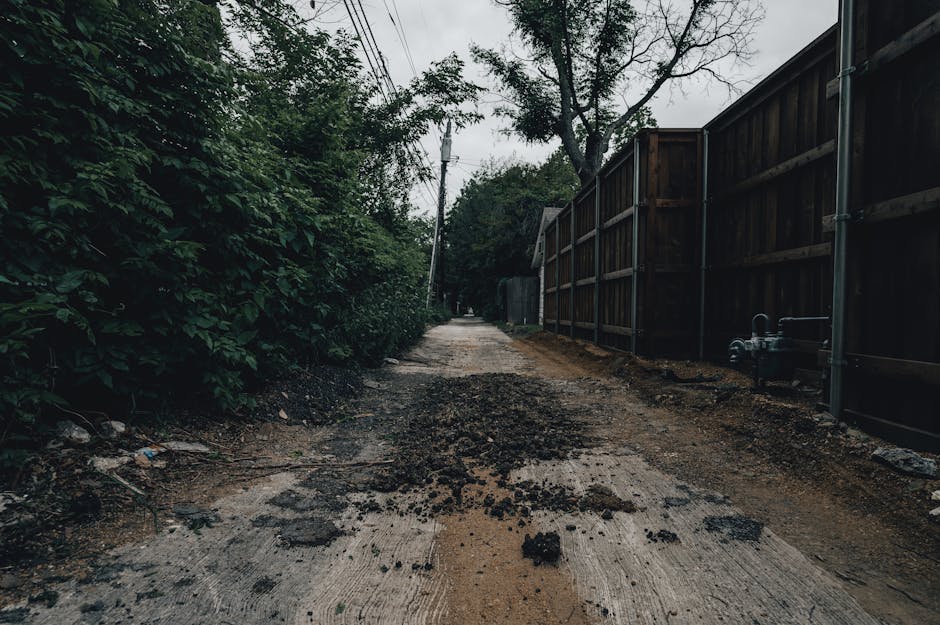
South Florida’s native soil is largely sand and fill material. Sand drains well, but it also shifts under load — especially when it hasn’t been compacted. A mechanical plate compactor or roller is used to compress the subgrade so it can support the weight of the slab without settling.
Without compaction, the slab sits on loose material that compresses unevenly over time. That’s how you get a patio that cracks down the middle or a driveway that sinks near the edges. This is one of the most common concrete pouring mistakes Florida contractors see on failed jobs they’re called to repair.
Base Material: The Layer Between Soil and Concrete
A properly compacted layer of crushed limestone or limerock base goes between the subgrade and the concrete. This layer serves three purposes: it distributes load evenly, it provides a stable surface for the concrete to cure against, and it improves drainage beneath the slab.
In Broward County, most residential pours call for a minimum of four inches of compacted base material. Skipping this — or using the wrong material — is one of the fastest ways to guarantee premature cracking.
Moisture Barriers: Blocking Water from Below
South Florida’s water table sits close to the surface in many areas, particularly near the coast in Deerfield Beach and Hollywood. Moisture migrating up through the subgrade and into the concrete can cause long-term damage — including spalling, efflorescence, and weakened structural integrity.
A vapor barrier (typically 6-mil or 10-mil polyethylene sheeting) placed over the base material blocks that moisture. It’s a simple, inexpensive step that pays for itself many times over. Yet it’s regularly skipped on budget jobs.
What South Florida’s Climate Does to Poorly Prepped Concrete
Every region has its concrete challenges. But concrete pouring mistakes Florida homeowners encounter are amplified by conditions that don’t exist in most of the country.
- Heat and rapid curing: Concrete poured in 90°+ heat cures faster on top than on the bottom. Without a stable, moisture-controlled base, this uneven curing causes surface cracking almost immediately.
- Heavy seasonal rain: Broward County averages over 60 inches of rain per year, much of it concentrated in summer storms. Water finds every gap in poorly graded or uncompacted ground and undermines the slab from below.
- Sandy, shifting soils: Unlike clay-heavy soils in other states, South Florida’s sand-based subgrade offers little natural cohesion. Without compaction and base material, it simply moves.
- High water table: In many Broward municipalities — especially in low-lying or flood-zone areas near Fort Lauderdale and Dania Beach — groundwater can be just a few feet below the surface. This affects both the subgrade stability and the moisture exposure of the finished slab.
These factors don’t just increase the chance of failure. They accelerate it. A slab that might last ten years on bad prep in a dry, cold climate may crack within a single rainy season here.
How to Avoid These Mistakes — What to Ask and What to Verify
If you’re hiring someone to pour a driveway, patio, pool deck, or any flatwork on your property, here’s what to confirm before a single yard of concrete shows up.
Before You Sign a Contract
- Ask about site prep scope: The proposal should clearly list grading, compaction, base material type and thickness, and whether a vapor barrier is included. If it just says “pour concrete slab,” that’s a red flag.
- Confirm the base material: In Broward County, compacted limerock is standard. Ask what they’re using and how thick the layer will be.
- Ask about permits: Many residential concrete projects in Florida require a permit, especially if they’re attached to the home or exceed a certain square footage. The Florida Building Code sets structural requirements that affect thickness, reinforcement, and base prep. You can verify local requirements through floridabuilding.org.
- Check the license: Florida requires a state license for general contracting and concrete work above a certain scope. You can verify any contractor’s license through myfloridalicense.com.
During the Job
Walk the site before the pour day. You should see exposed, graded dirt — not grass. You should see a layer of compacted base material. You should see reinforcement (rebar, wire mesh, or fiber reinforcement depending on the application). If the crew is pouring directly onto the ground with no visible prep work, stop the job and ask questions.
This is where homeowners usually underestimate the cost — not in the concrete itself, but in the prep work that makes it last. A proper pour in South Florida typically includes more labor and base material than the same project would in a cooler, drier climate. That’s not markup. That’s the job done right for local conditions.
What Homeowners Often Miss
Even informed homeowners sometimes overlook a few details that matter in Broward County.
- Existing tree roots: Root systems near the pour area can shift the subgrade over time. They need to be addressed during site prep — not after the slab cracks.
- Drainage connections: Your new slab may change how water flows across your property. Grading should account for this, and in some municipalities, you may need to tie into existing drainage infrastructure.
- Cure time in heat: Concrete needs to be kept moist and protected during curing. In South Florida’s summer heat, this means active curing management — wet curing, curing compound, or both. A crew that pours and leaves without a curing plan is cutting corners.
- Expansion joints: Thermal expansion is more pronounced in Florida’s heat. Control joints and expansion joints need to be planned into the layout — not cut randomly after the fact.
Every one of these details is part of concrete site preparation Pompano Beach and Broward County homeowners should expect from a licensed contractor.
Get It Right the First Time
Concrete is one of the most permanent things you’ll add to your property. When it’s done right, it lasts decades. When it’s done wrong — when someone skips grading, pours on uncompacted sand, or ignores the water table — you’re looking at costly removal and replacement, sometimes within a year or two.
If you’re planning a driveway, patio, walkway, or any concrete work in Broward County, the next step is a site evaluation. Oak Park Construction handles concrete pouring mistakes Florida homeowners shouldn’t have to fix twice. We’ll walk your property, assess the subgrade conditions, and give you a realistic scope and budget for the job done properly.
Request a free site evaluation and concrete scope review — reach out here or call us directly.