YouTube Makes It Look Easy — South Florida Makes It Hard
You watched the video. A guy in a temperate climate mixes some bags, pours a slab in his backyard, and smooths it out with a trowel. Looks doable, right? Now try that in Pompano Beach in July — on sandy fill soil, with a water table two feet below grade, under building codes written for hurricane country. That’s where the tutorial falls apart.
Hiring a concrete slab contractor South Florida homeowners can verify through licensing and local experience isn’t about paying someone for something simple. It’s about understanding that a slab poured here faces conditions that most DIY content never addresses. This article breaks down what actually goes into a code-compliant, long-lasting concrete slab in Broward County — and why cutting corners upfront usually costs more in the end.
What a Concrete Slab Actually Requires in South Florida
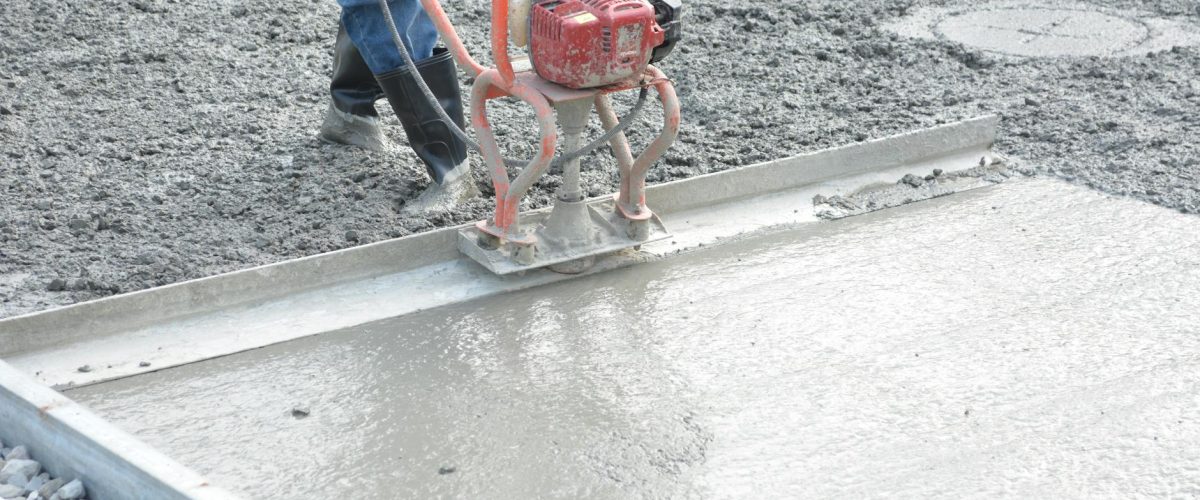
A concrete slab looks like a flat surface. Underneath, it’s an engineered system. In South Florida, that system has to account for expansive sandy soils, high humidity during cure, potential flooding, and wind uplift loads if the slab supports a structure.
Here’s what a proper slab installation involves at minimum:
- Site grading and soil preparation — removing organic material, compacting fill, establishing proper drainage slope
- Sub-base material — typically compacted limerock or crushed stone to stabilize the surface under the slab
- Vapor barrier — essential in our climate to prevent moisture from migrating up through the concrete
- Steel reinforcement — rebar or welded wire mesh placed at the correct height within the pour
- Proper concrete mix and thickness — Florida Building Code specifies minimums depending on the slab’s use
- Control joints — cut at the right spacing and depth to manage where cracks form
- Curing protocol — keeping the surface moist and protected, especially in South Florida’s heat
Skip any one of these, and you’re looking at cracking, settling, or moisture damage within a year. That’s not a maybe — it’s how concrete behaves when the ground and climate work against a shortcut.
Why South Florida Conditions Change Everything About Concrete Slab Installation
Soil and Water Table
Much of Broward County sits on sandy, poorly draining soil with a high water table. In areas like Dania Beach and Hollywood, the water table can sit just a couple of feet below the surface during wet season. That means your sub-base prep has to compensate for moisture from below — not just rain from above. Without proper compaction and a vapor barrier, moisture wicks into the slab and damages whatever sits on top of it.
This is one of the first things a concrete slab contractor South Florida builders rely on will evaluate before pouring anything.
Heat and Humidity During the Pour
Concrete doesn’t just “dry” — it cures through a chemical reaction called hydration. That process is extremely sensitive to temperature and moisture. In South Florida’s summer, surface temperatures can exceed 90°F by mid-morning. Pour concrete onto hot, dry sub-base without proper prep, and the water in the mix evaporates too fast. The result? Surface cracking, reduced strength, and a slab that underperforms from day one.
Professional crews time their pours, adjust mix designs for heat, and apply curing compounds or wet-cure methods. A DIY pour rarely accounts for any of this.
Florida Building Code and Permits
Here’s what most DIY videos completely ignore: in Broward County, any concrete slab that supports a structure, connects to an existing building, or exceeds certain sizes typically requires a permit. The Florida Building Code sets minimum standards for slab thickness, reinforcement, and connection to footings — especially in areas subject to high wind loads.
For structural slabs, you may also need a signed and sealed engineering drawing. Even a patio slab may require inspection if it’s attached to the home or alters drainage on the property. Pouring without a permit doesn’t just risk a fine — it can create title and insurance problems when you sell.
In municipalities like Fort Lauderdale and Deerfield Beach, code enforcement actively monitors unpermitted work. This is one of the most common issues homeowners discover too late.
What a Concrete Slab Contractor South Florida Homeowners Should Verify
Not every contractor handles concrete the same way. Before you sign anything, confirm these specifics:
- Active Florida license — verify through MyFloridaLicense.com. A general contractor or concrete specialty contractor license is required for permitted slab work.
- Permit responsibility — your contractor should pull the permit, not ask you to do it yourself. If they avoid the permit, that’s a red flag.
- Scope detail — get the sub-base prep, reinforcement type, slab thickness, and finish explicitly listed in writing. “Pour a slab” is not a scope of work.
- Soil assessment — ask how they evaluate the existing soil conditions. If the answer is “we just pour on what’s there,” walk away.
- Cure plan — especially for summer pours, ask how they protect the curing process.
A legitimate concrete slab contractor in South Florida will welcome these questions. Hesitation usually signals that the work won’t be done to code.
What Homeowners Underestimate About Concrete Work
The Real Cost of DIY Failure
A cracked or settled slab isn’t something you patch and move on from. In most cases, the slab has to be demolished, hauled away, the sub-base re-prepped, and a new slab poured from scratch. That demolition-and-repour cycle often costs 1.5 to 2 times the original job. Homeowners who started with a DIY pour to save money regularly end up spending more than a professional concrete slab installation in Broward County would have cost in the first place.
Insurance and Resale Implications
Unpermitted concrete work can affect your homeowner’s insurance — particularly if the slab supports a structure like a screen enclosure, addition, or carport. During a property sale, a title search or 4-point inspection may flag the work. At that point, the buyer’s lender may require you to either get the work permitted retroactively or remove it. Neither option is cheap or fast.
It’s Not Just Concrete — It’s Drainage
Every slab changes how water moves across your property. In South Florida, where afternoon storms can dump inches of rain in an hour, a poorly graded slab can redirect water toward your foundation, your neighbor’s yard, or your pool equipment. A professional installation accounts for drainage slope and sometimes ties into existing swale or stormwater systems. A DIY pour almost never considers this — until the flooding starts.
When DIY Concrete Might Be Reasonable — and When It Isn’t
Small, non-structural projects — like setting a few stepping stones or pouring a tiny pad for a trash can enclosure — are generally low-risk for a handy homeowner. But once you’re talking about a slab for a patio, a shed foundation, a driveway extension, or anything attached to the house, you’ve crossed into permit territory and structural consequence.
In Broward County, the line between “small project” and “code-regulated work” is thinner than most homeowners expect. When in doubt, a quick call to your local building department can clarify whether a permit is needed — and it usually is.
The Next Step for Your Concrete Project
If you’re trying to figure out whether your slab project needs professional installation — or you already know it does and want to make sure it’s done right — the next step is a straightforward conversation about your site, your scope, and what Broward County requires. Oak Park Construction handles concrete slab installation in Broward County from permitting through final inspection, with proper soil prep, reinforcement, and code compliance built into every job. Reach out to schedule a site visit and get a realistic scope and estimate for your project.